


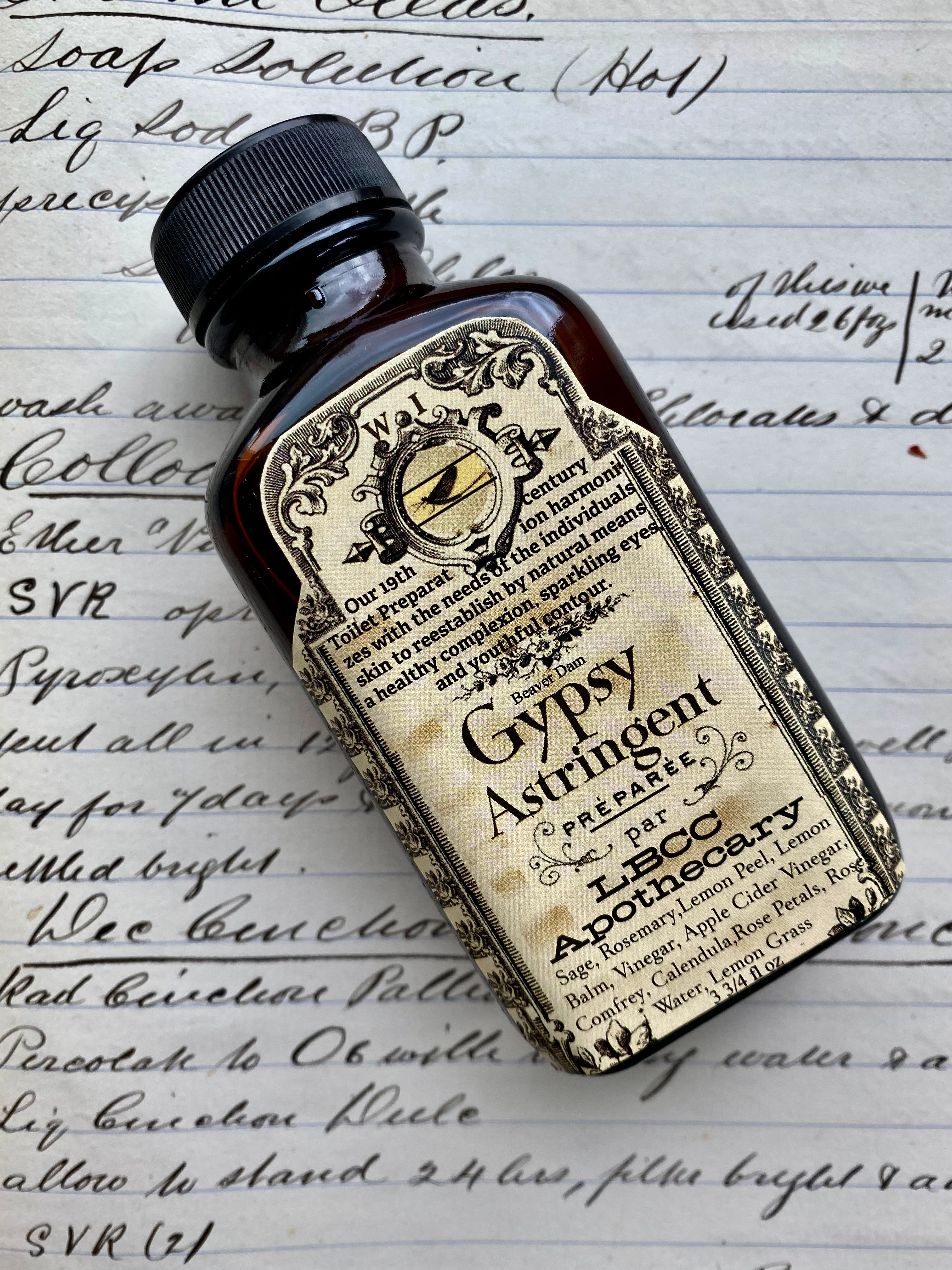

Story of Our Product
Rooted in centuries of European tradition, our Gypsy Astringent traces its ancestry to the legendary Hungary Water—first recorded in the 14th century, but made popular in the 16th century by the Queen of Hungary to restore her youthful beauty. From royal courts to Roma caravans, this formula evolved across borders and generations, shifting from a fragrant cologne to a potent herbal tonic help clear and balance the PH of the skin.
This particular version honors the reinterpretation by Roma herbalists of the 1800s, who infused the essence of their plant wisdom into a multi-use elixir for face, scalp, and foot wash. Each small-batch bottle is layered with vinegar’s natural pH-balancing effect and the properties of organic herbs: Rose for softness, Rosemary for blemishes, Calendula for repair, and Sage for cleansing.
Beloved by herbalists for its versatility and said to restore the glow of youthful queens, our Gypsy Astringent transcends mere skincare. It bridges the busy lives of yesteryear and today, embodying the finest traditions of Old World alchemy.
Origins & Lore
First emerging beyond Hungary in 1370, what became known as “Hungary Water” was gifted to the fragrance-loving French King Charles V le Sage. Before the rise of cologne in the 18th century, it reigned as Europe’s most cherished scent. Over generations, its formulation transformed—what began as aromatic water evolved into an herbal skin tonic beloved for its vinegar-based potency.
Our Gypsy Astringent derives its lineage from the Roma herbalists of the 19th century, who infused the original Queen of Hungary Water with plants and practices from their own traditions. Intended as a multi-use skin remedy, it was said to ease blemishes, tone pores, invigorate hair, soothe feet, and even freshen breath—with a strong vinegar bite that is certainly bold! These recipes were often unnamed and handed down by description, so we bestowed this name with deep respect for their botanical mastery and cultural legacy.
Legend Has It, the 70-year-old Queen of Hungary restored her youthful beauty with daily use, prompting a marriage proposal from the 28-year-old Polish prince. While we make no royal promises, what we offer is a storied astringent that tells the history of beauty rituals, and herbal healing.
A Glimpse into the History of Roma Healing
Roma healing traditions are rooted in centuries of practical herbal knowledge, passed down orally through generations. As the Roma people migrated from northern India through the Middle East and into Europe, they gathered and adapted remedies from many cultures, creating a rich and flexible system of folk medicine.
Herbal remedies were central to their approach. Roma healers used accessible plants like garlic, nettle, elderflower, and rosemary to treat common ailments such as fevers, wounds, and digestive issues. Salves, teas, poultices, and infused oils were prepared using simple tools and ingredients gathered from the surrounding environment.
Observation and experience guided treatment. Without written records, knowledge was preserved through storytelling and apprenticeship. Healers learned which herbs reduced swelling, which soothed burns, and which could be used to clean wounds or ease joint pain—often through trial, error, and careful attention to outcomes.
Adaptability was key. Roma healers often served within communities that had limited access to formal medical care, so their remedies had to be effective, affordable, and made from what was locally available. This led to a tradition of resourcefulness and innovation, blending old-world knowledge with new discoveries.
While practices varied by region and family, the emphasis was always on practical care, natural ingredients, and simple remedies that could be made and used at home. While we choose to use the name Gypsy in the title of our product, it is in no way meant to be derogatory to the Roma people, but rather as a tribute to the historical identity of an amazing culture of healers, artists, and musicians.
Cross-Cultural Usage
The concept of herbal elixirs and astringents transcended borders, finding its place in diverse cultures around the world.
• India: Ayurveda, the ancient Indian system of medicine, emphasized the use of herbal tonics and astringents for skin health and balance. Ingredients like neem, turmeric, and sandalwood were commonly used for their purifying and soothing properties.
• China: Traditional Chinese Medicine incorporated herbal washes and tonics to promote skin vitality and overall health. Herbs like ginseng, green tea, and chrysanthemum were valued for their rejuvenating effects.
• Middle East: Rose water, a staple in Middle Eastern skincare, served as a natural astringent and was celebrated for its hydrating and calming qualities.
• Europe: Beyond Hungary Water, European traditions included the use of herbal infusions and vinegars for skin care, with ingredients like lavender, chamomile, and rosemary playing key roles.
• Africa: African herbal practices often featured the use of shea butter, aloe vera, and baobab oil, combined with herbal extracts to nourish and protect the skin.
• Americas: Indigenous cultures in the Americas long used plants like calendula, witch hazel, and aloe vera in their skincare rituals, highlighting the universal appeal of botanical remedies.
This cross-cultural tapestry of herbal wisdom underscores the timeless and universal nature of our Gypsy Astringent, connecting traditions and practices from around the globe.
Why Choose Our Product
• Timeless Heritage: Rooted in centuries of tradition, our formula honors the wisdom of Roma herbalists and the legacy of Hungary Water.
• Natural Ingredients: Crafted with organic herbs like Rose, Rosemary, Calendula, and Sage, each bottle is a celebration of nature’s finest.
• Versatile Use: From toning pores to soothing feet, our Gypsy Astringent is a multi-use elixir for face, scalp, and beyond.
• Small-Batch Quality: Every bottle is lovingly made in small batches to ensure the highest quality and care.
• Eco-Friendly: Packaged sustainably, our product reflects a commitment to the environment and future generations. Please recycle!
• A Beauty Ritual, Not Just Skincare: Elevate your daily routine with a product that’s more than skincare—it’s a story, a tradition, and a celebration of historical and timeless beauty.
